
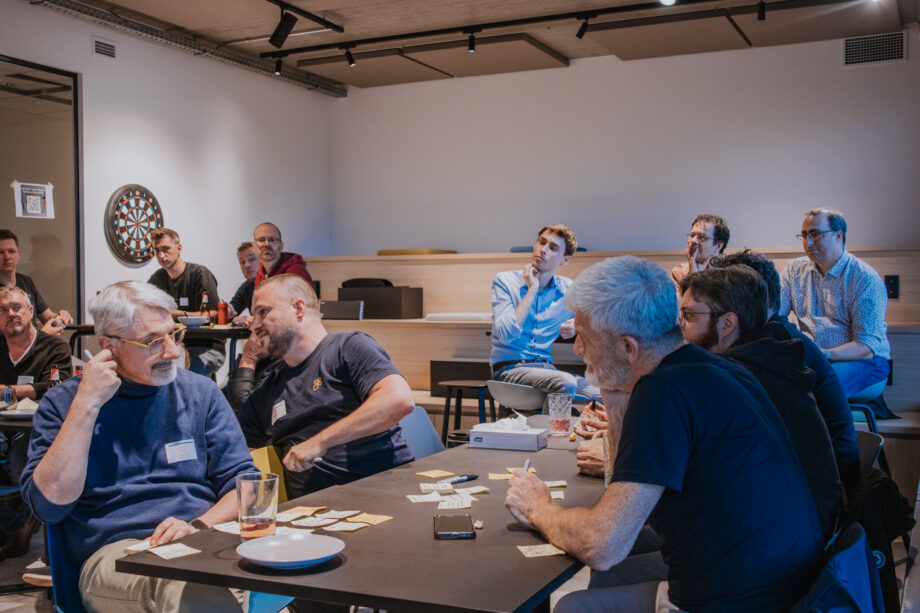
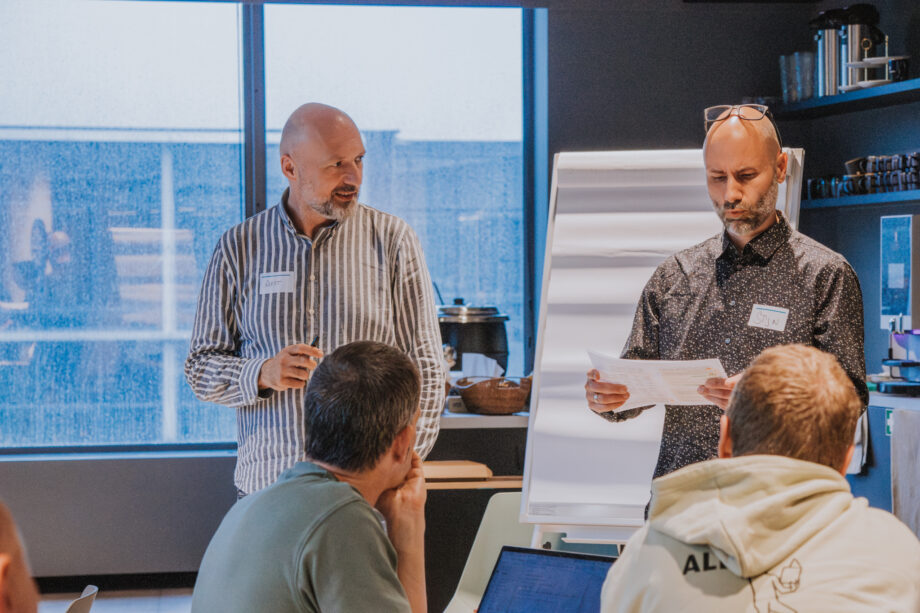
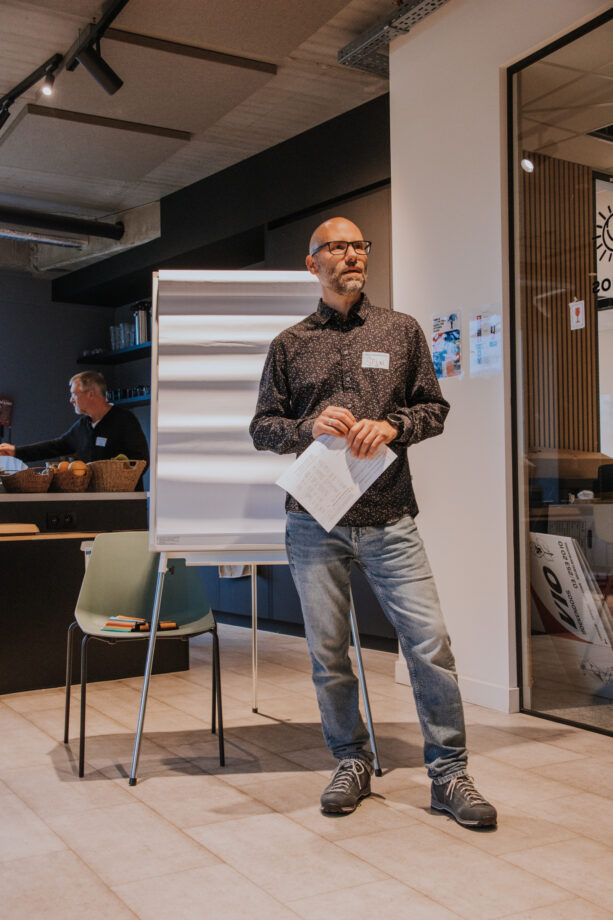
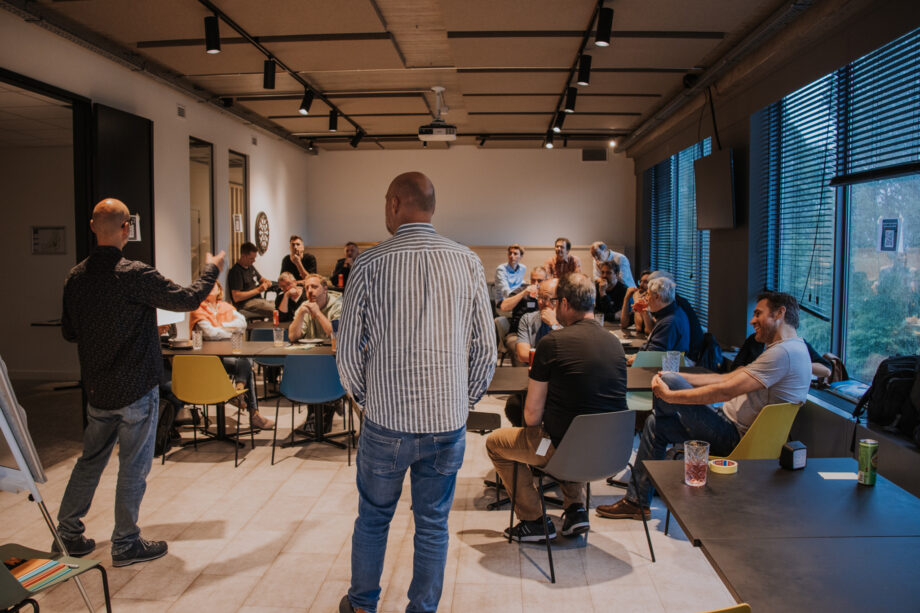
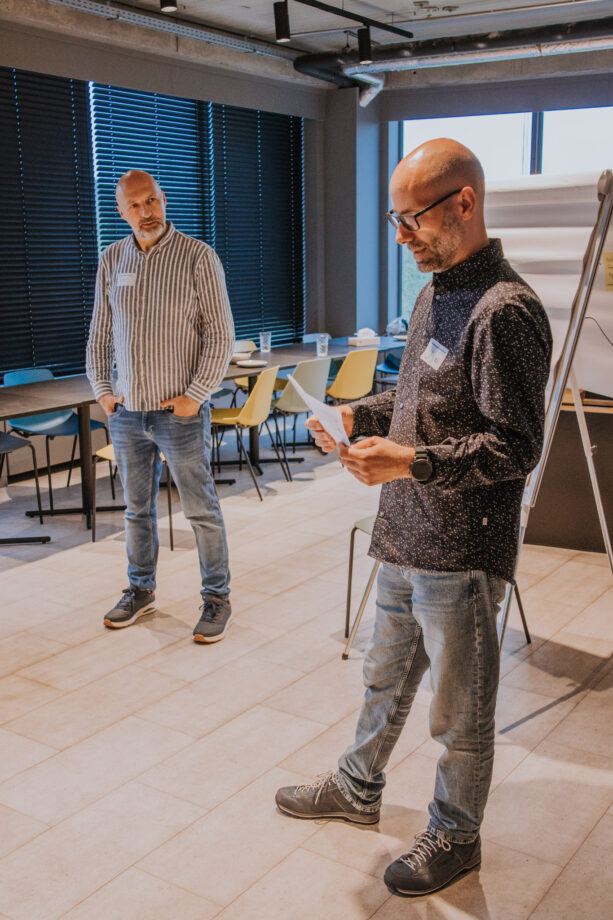
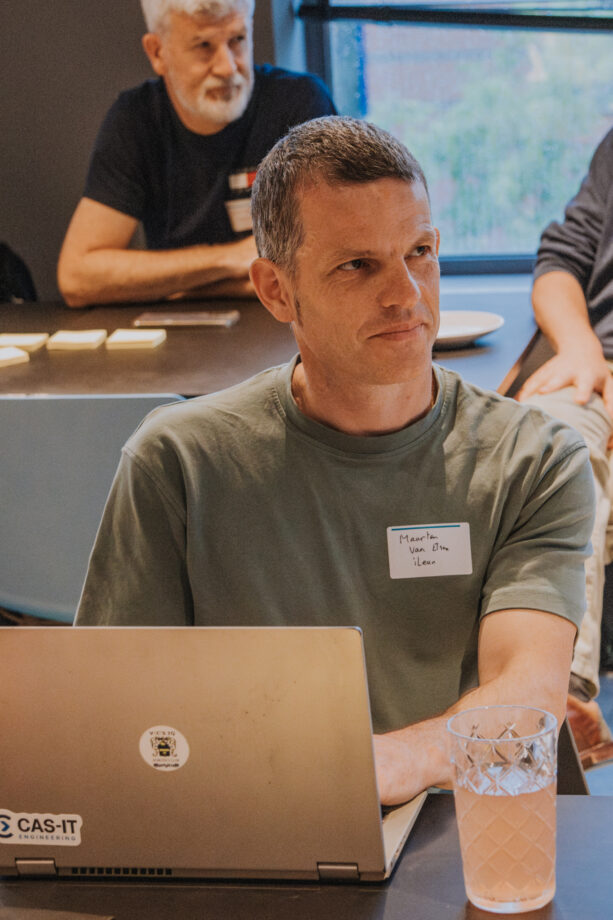
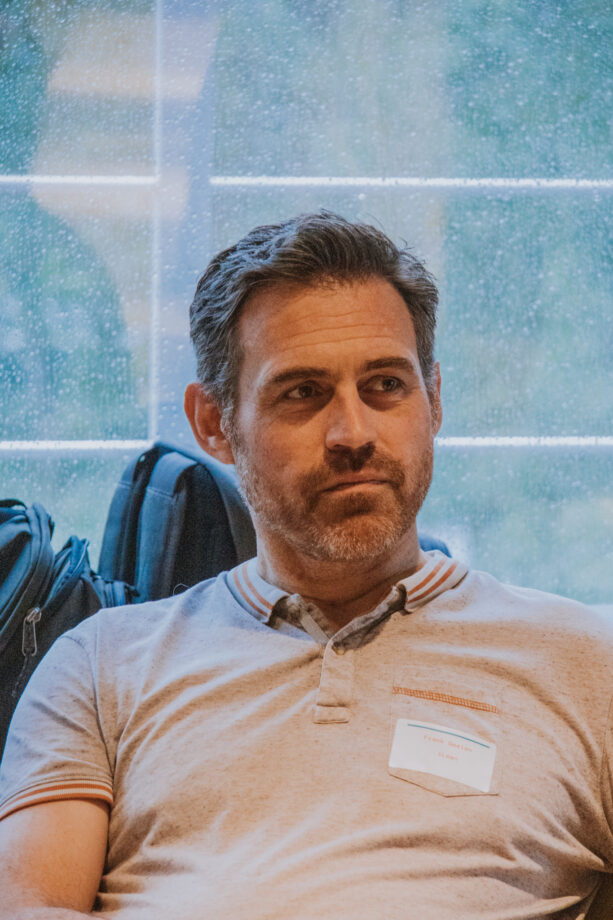
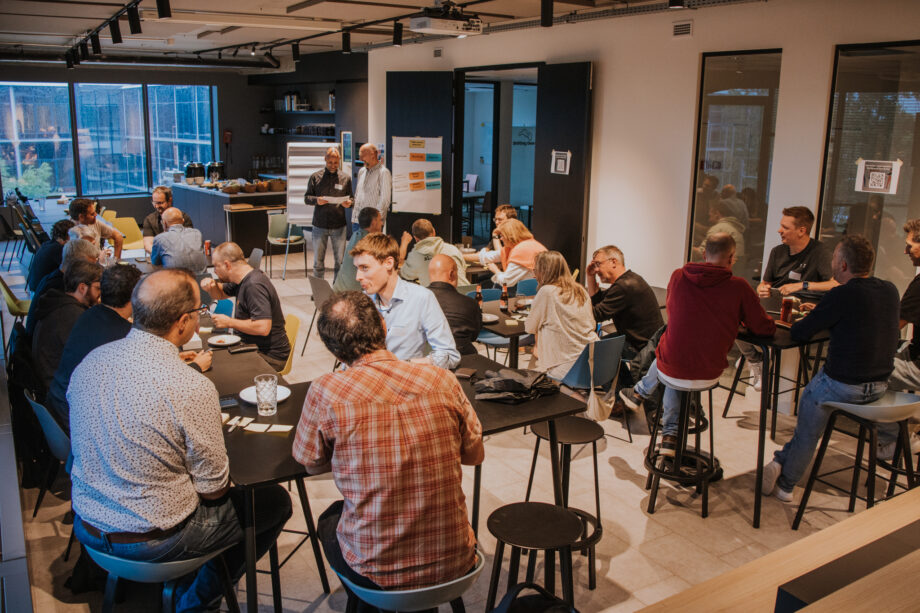
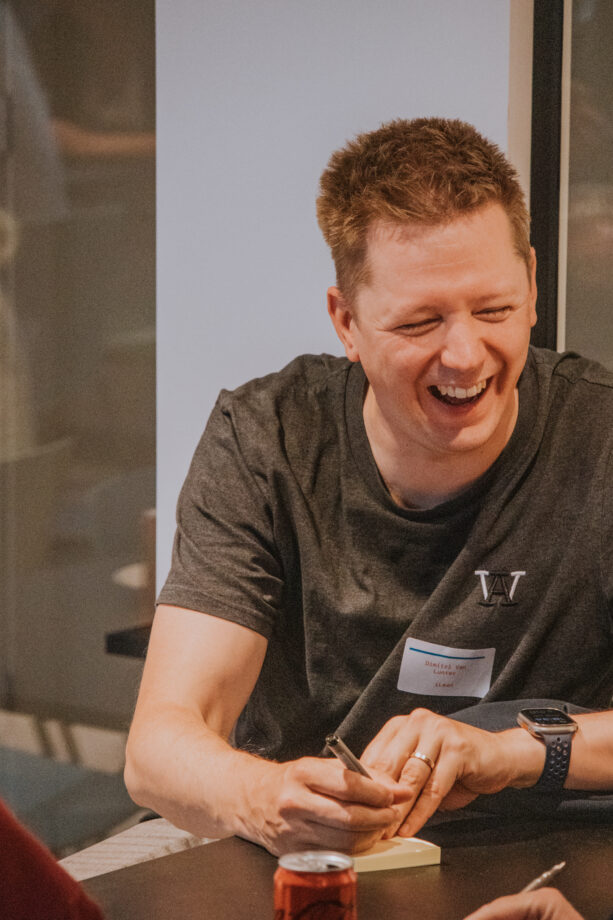
On Wednesday, June 3, 24 dedicated participants made their way to our brand-new office in Kontich. Hosted by Philippe and Tom, this marked the very first Agile Kitchen in our new workspace.
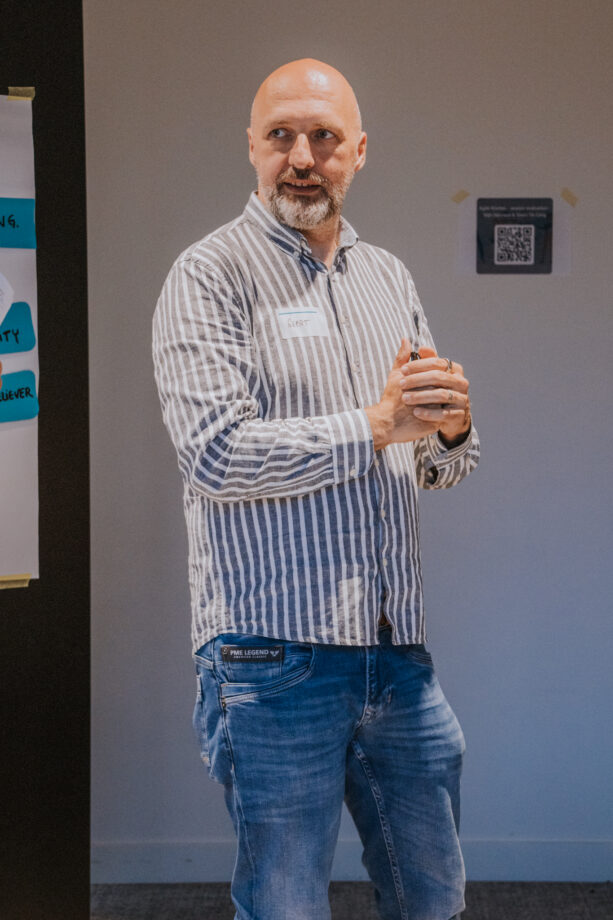
The evening featured a reunion with former iLeaners Stijn Decneut and Geert De Cang, who brought their signature humor and pragmatic wisdom to tackle a highly complex topic: how to make decisions when the future is unpredictable.
The limits of pure empiricism
Developing a successful product or leading organizational change in a complex world is tough. Stijn and Geert quickly challenged a common agile trap: the over-reliance on pure empiricism (= the practice of making decisions based on observation and real-world experience rather than upfront theory or planning). We often focus heavily on building a product, whether through a Minimum Viable Product in Lean Startup or a Sprint Review in Scrum, and then ask the customer for feedback.
But what if the customer does not actually know what they want? What if the feedback is flawed? And more importantly, what if iterating is simply not an option?

The group explored this through a relatable case study: planning a memorable surprise party for your partner. You cannot simply iterate on a surprise party five times and gather feedback along the way. The surprise would be completely ruined by the second attempt.
Theory-grounded empiricism and the VALUE Method
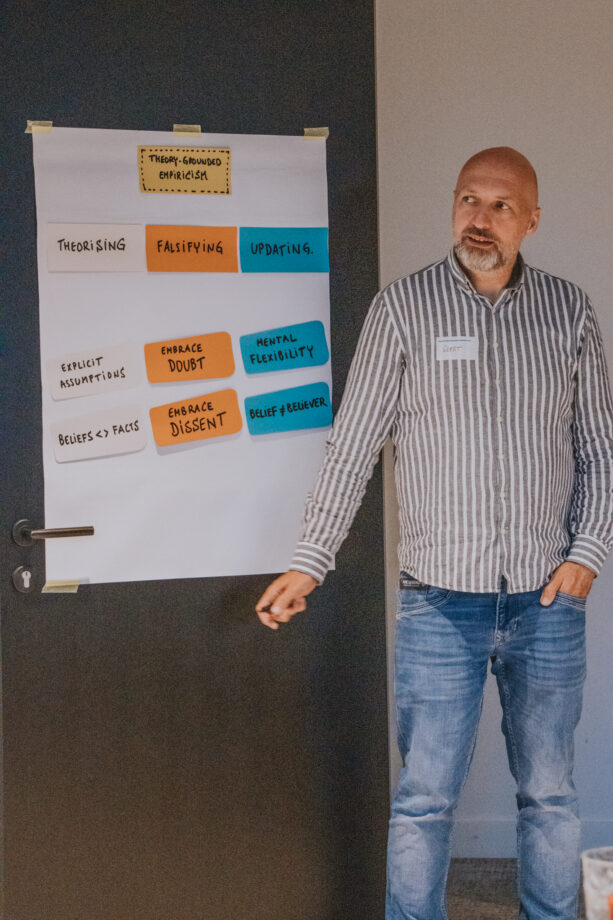
This is where the VALUE Method comes in, a methodology rooted in academic research that focuses on managing factual uncertainty. To replace endless brainstorming and blind iteration, Stijn and Geert introduced the concept of “theory-grounded empiricism.”
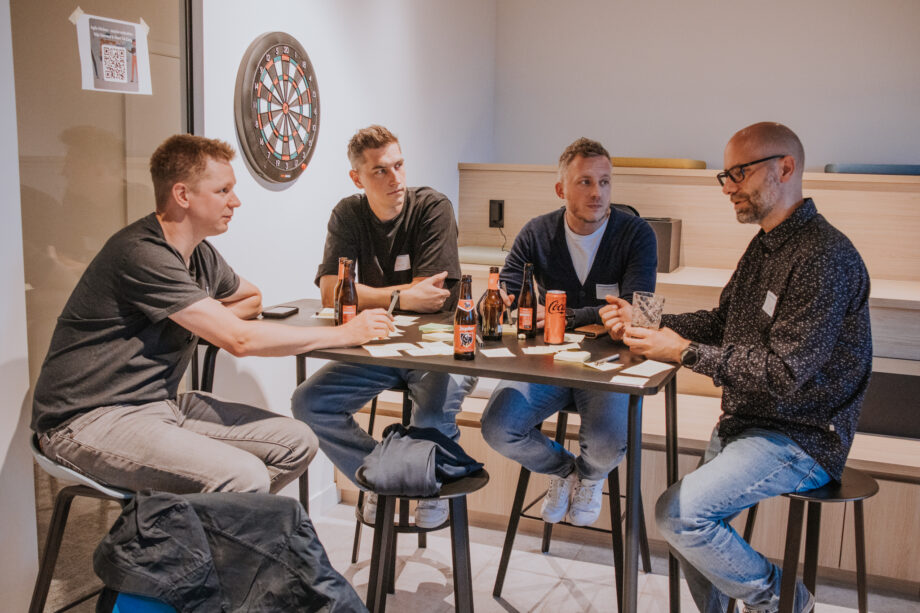
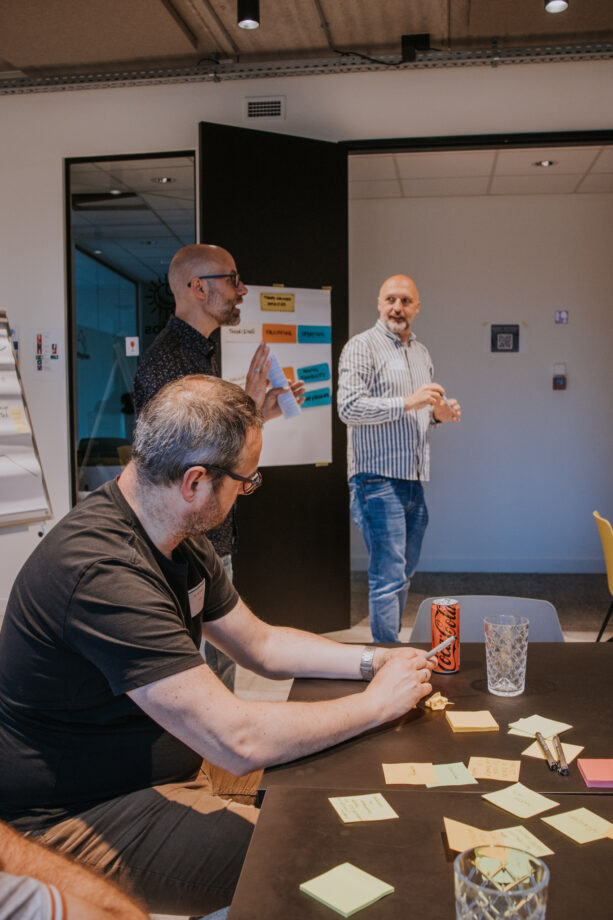
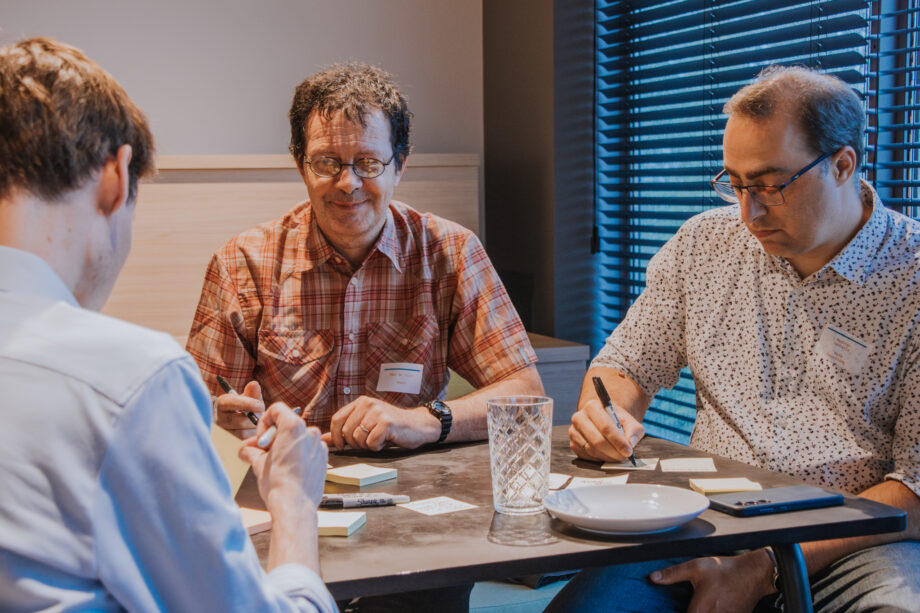
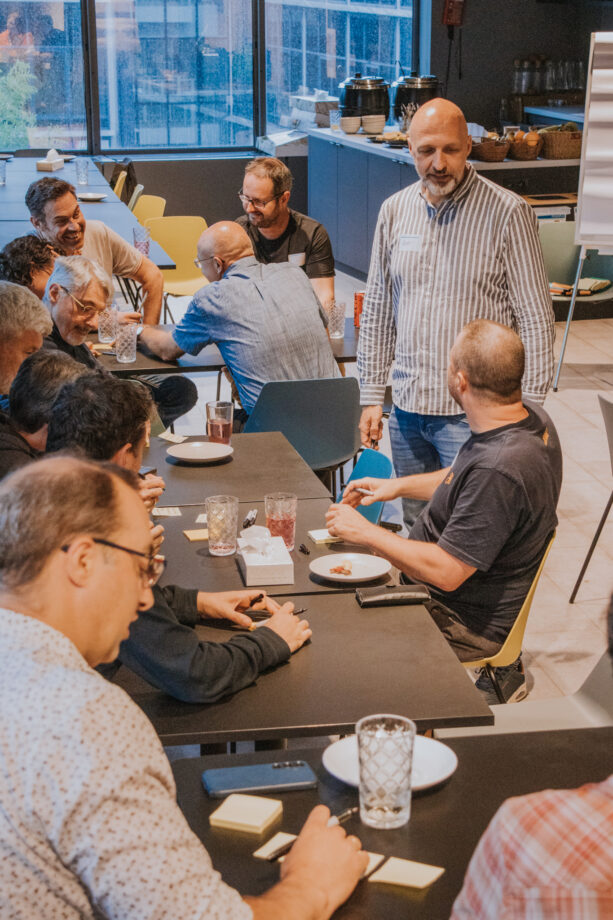
Each group worked with real cases or situations from participants. These were moments when things felt stuck, leadership was misaligned, or questions remained unanswered.
Before building anything, teams need a simple, structured theory explaining why they believe an idea will work. The framework relies on a few core principles:
1. Theorizing
Be explicit about your assumptions and beliefs. It requires a combination of gut feeling and logic. The team needs to believe in the theory, but remain willing to pivot if the facts prove them wrong.
2. Embracing doubt and dissent
Interestingly, simpler theories and greater internal disagreement often lead to greater success. If everyone agrees too easily, you are likely playing it too safe and not digging deep enough.
3. Falsifying
You must be able to prove whether your belief is right or wrong.
4. Updating
This requires mental flexibility. You must be able to separate the belief from the believer and update your worldview when new data arrives.
Formulating and testing hypotheses
When creating hypotheses, the speakers advised using a clear format: “If X leads to Y, then we must be able to observe Z.”
A major warning was given regarding the “under the lamp post” principle. You should never base or limit your hypothesis simply on how easy it is to test. As Stijn and Geert quoted from Kent Beck: if it sounds like a bad idea, but you cannot prove it is wrong, it is a good idea to test.
They also highlighted the importance of test design and understanding trade-offs. You have to decide what you are optimizing for. They used a powerful analogy: Is it more important for your system to keep innocent people out of jail, or to ensure guilty people are locked up? This balance between false positives and false negatives is a crucial trade-off in statistical testing.
An eye-opening “aha” moment for the room was learning that even a customer panel with a 90% accuracy rate will still produce many false positives. It is similar to the early days of Covid testing, when the majority of positive test results were false positives due to base-rate fallacies.
Executive adoption and taking the leap
A crucial point raised during the session was that dealing with uncertainty requires more than just leadership endorsement. It requires executive adoption. Leaders need to truly adopt this mindset, learning to navigate and energize discussions based on assumptions and beliefs rather than demanding guaranteed roadmaps.
However, to avoid getting permanently stuck in theoretical discussions, teams must set a strict time limit. At some point, you have to come down from the mountain and take a leap of faith to test your product in reality.
Connections, drinks, and a new padel tradition
As always, the heavy theory was balanced with great community interaction. Stijn and Geert managed to turn an abstract, conceptual subject into a highly engaging and digestible narrative.
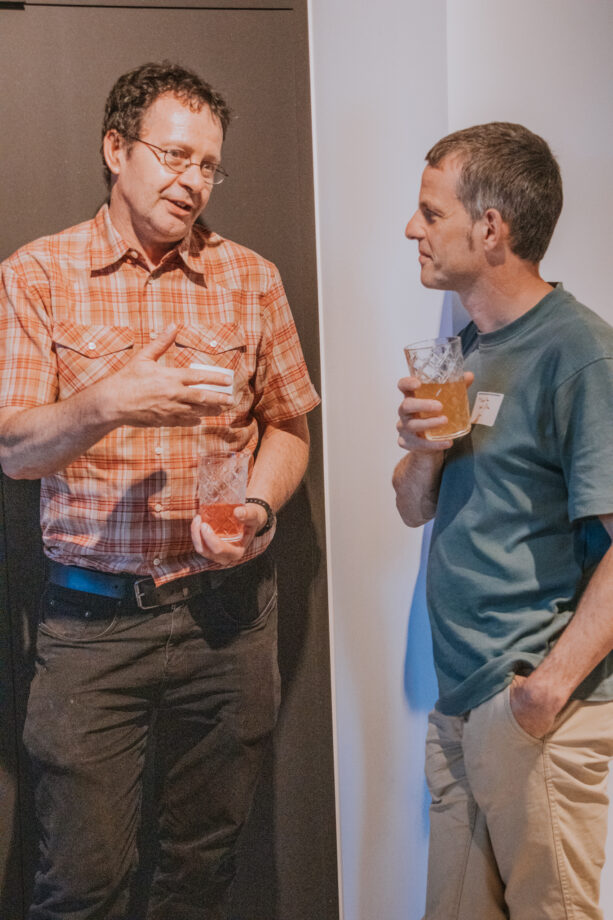
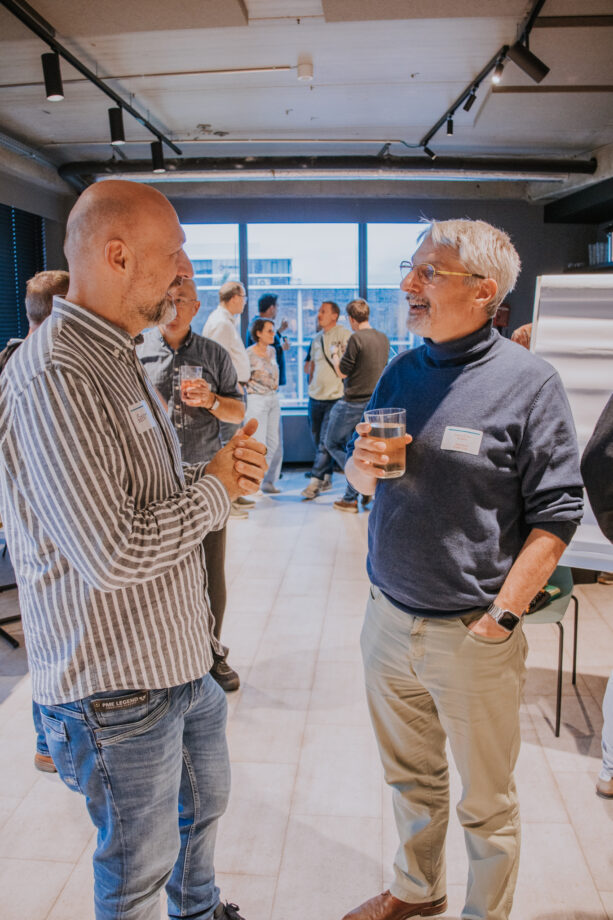
After the session, the conversations continued over sandwiches and drinks. To top off a highly successful inaugural evening in Kontich, a few attendees even braved the weather for a padel match on the nearby Cronos courts. We might just turn this into an Agile Kitchen tradition. It was an evening full of food for thought, leaving everyone with practical tools to replace doubt with structured decision-making.

Join the next Agile Kitchen
If you missed this edition, do not worry. The next Agile Kitchen session is already in the making. Follow us on LinkedIn or subscribe to our newsletter to make sure you secure your spot.