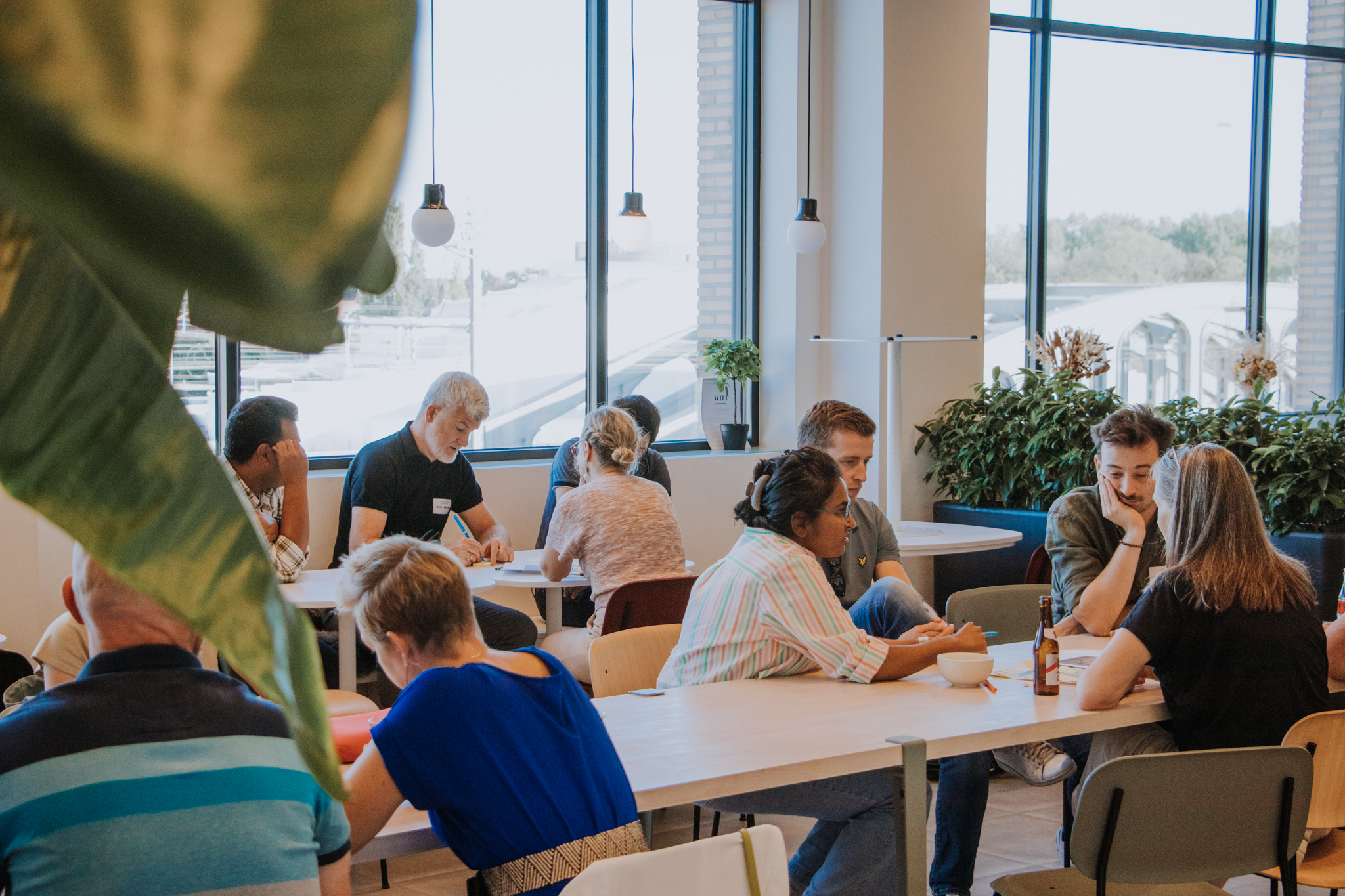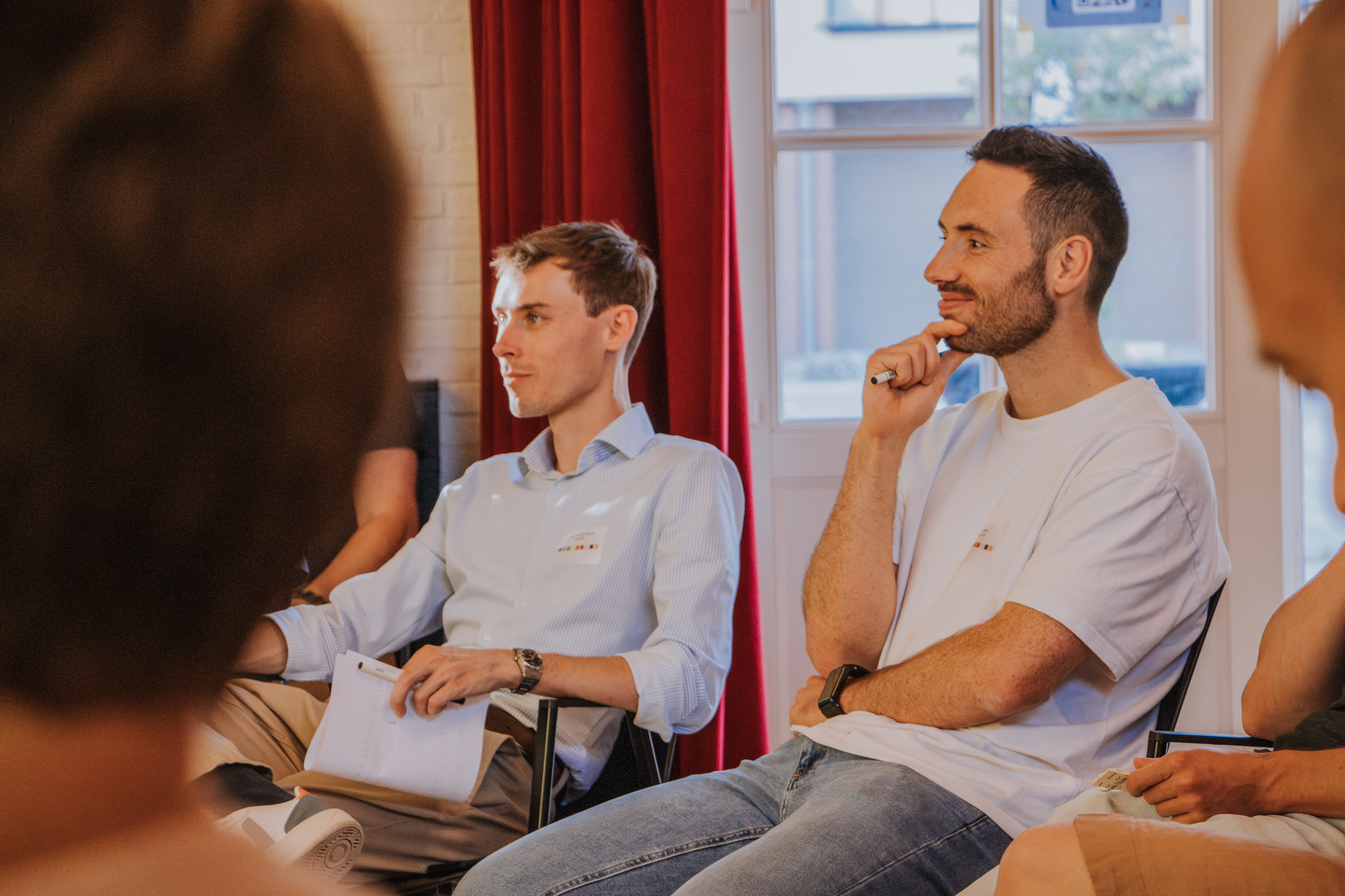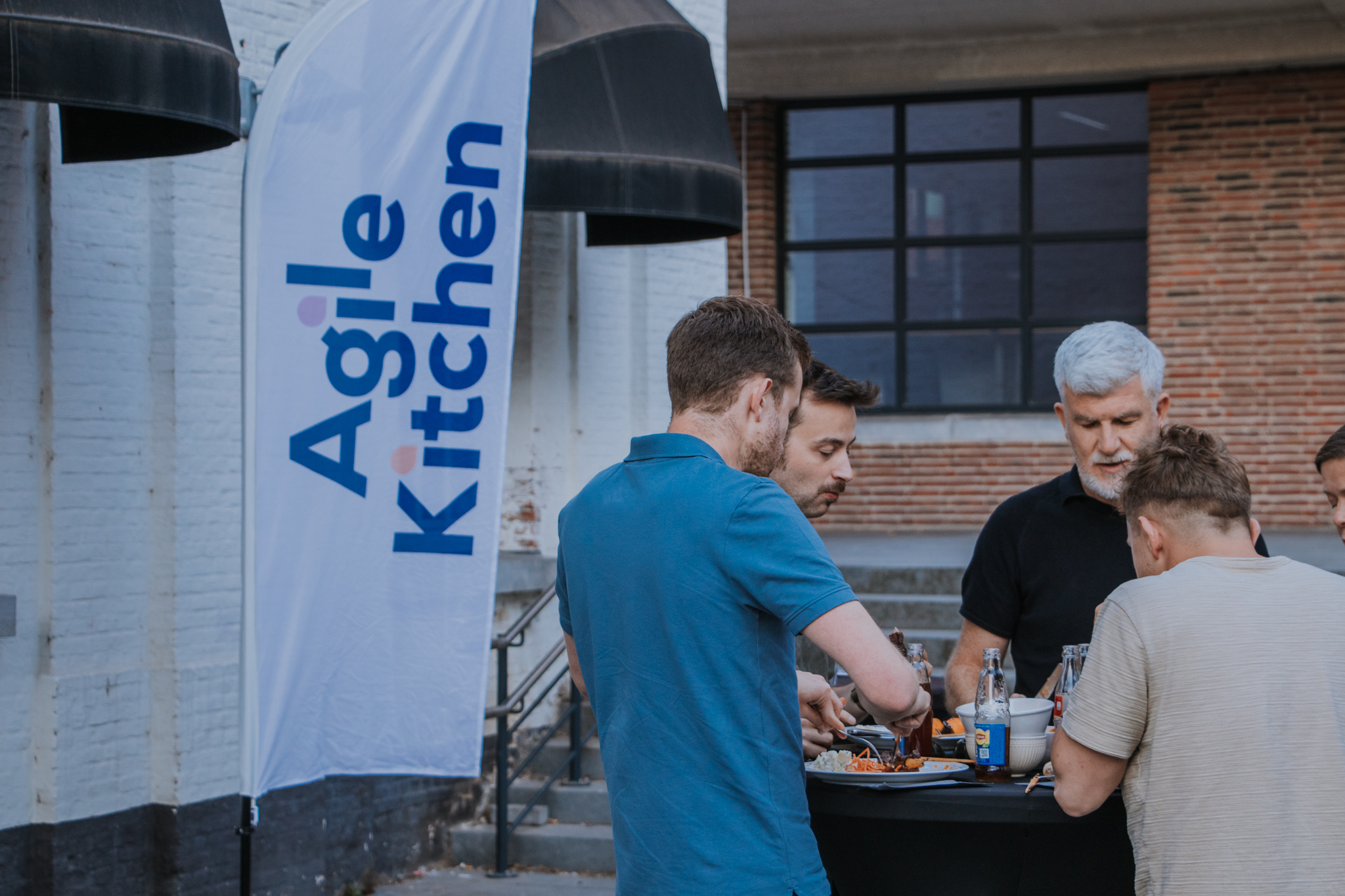



Monday, 25 August 2025, marked a special edition of Agile Kitchen. With two parallel sessions and a summer BBQ, the evening brought together over 40 participants for learning, reflection, and connection on a lovely summer evening.
The same concept, but presented in a different way. This time, we reversed the standard sequence: starting with the sessions, followed by a good BBQ. It was a success. The concentration generated from the workshops seamlessly transitioned into extended discussions over barbecue and refreshing beverages.
Agile Kitchen is always about learning through practice. We don’t believe in one-way presentations or abstract theory. Every edition is shaped around real challenges, shared experiences, and practical tools. This one was no different, just with a bit more sunshine and the smell of BBQ in the background.

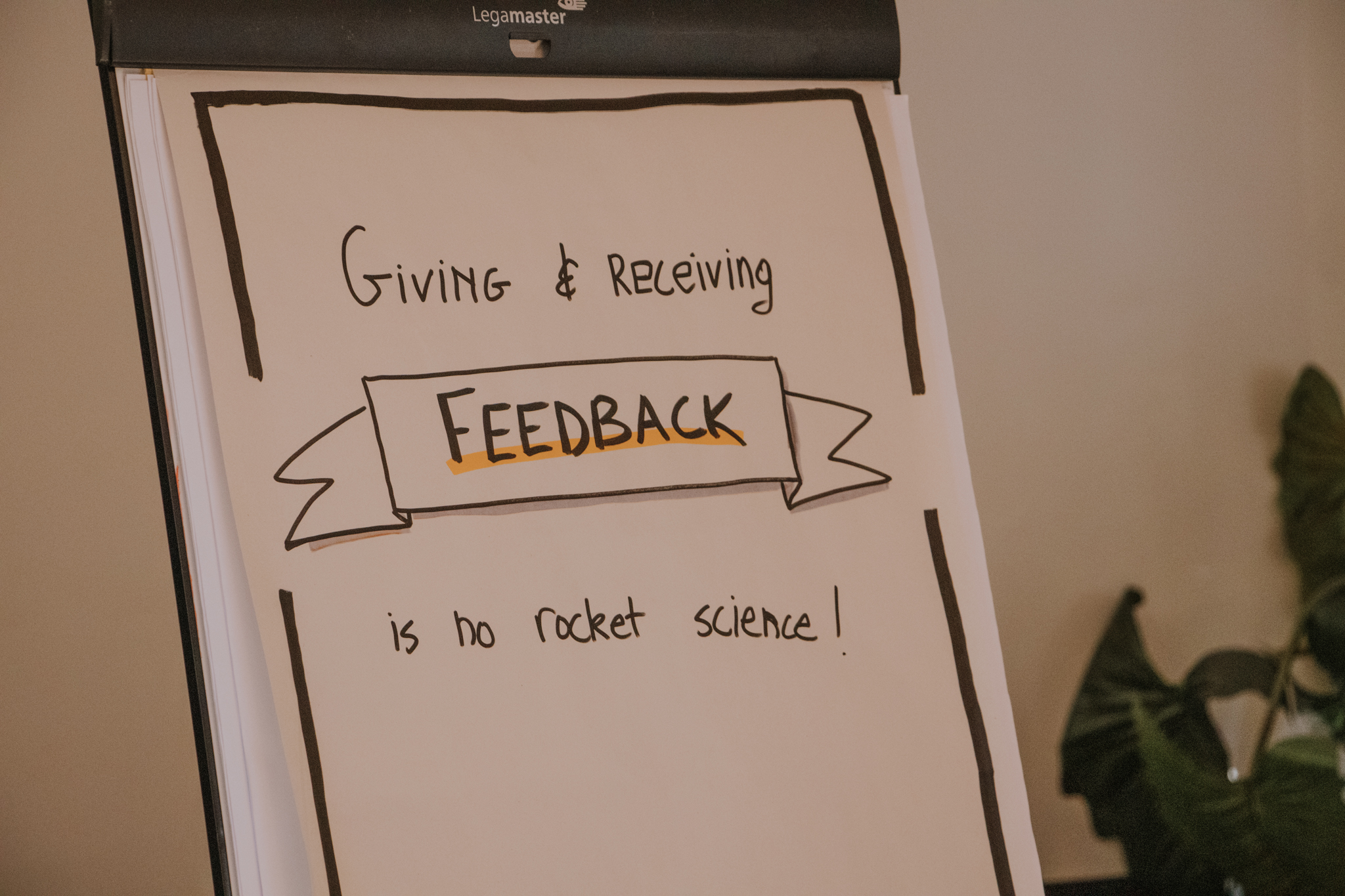
Giving and receiving feedback
With Philippe Vandessel & Geneviève Loriaux
We often say we want a feedback culture, but actually giving or receiving feedback can feel awkward. Sometimes even risky. That’s what this session tackled head-on.
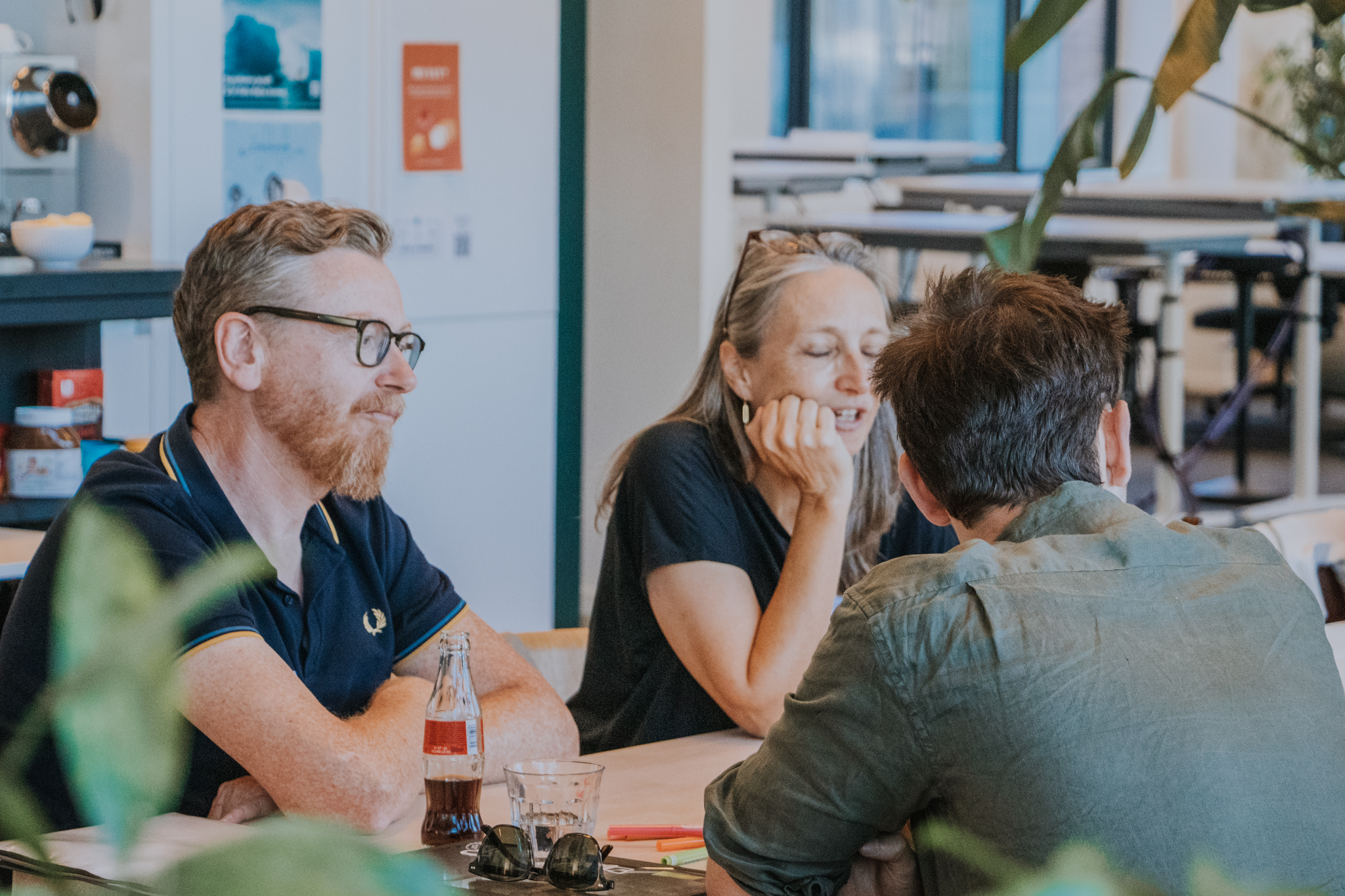
The evening began with a personal reflection: participants picked a card that represented a core quality and its potential pitfall, then paired up to talk about how that dynamic plays out at work. It was a light start with a deep purpose. Recognizing how our strengths can shape both the way we give feedback and how we receive it.
From there, the session unfolded in layers. Participants explored common types of feedback (the vague, the helpful, the loaded), discussed tone and body language, and considered how their own personal filters impact what they hear. The key message: feedback is personal. Understanding your own patterns is essential before trying to change someone else’s.
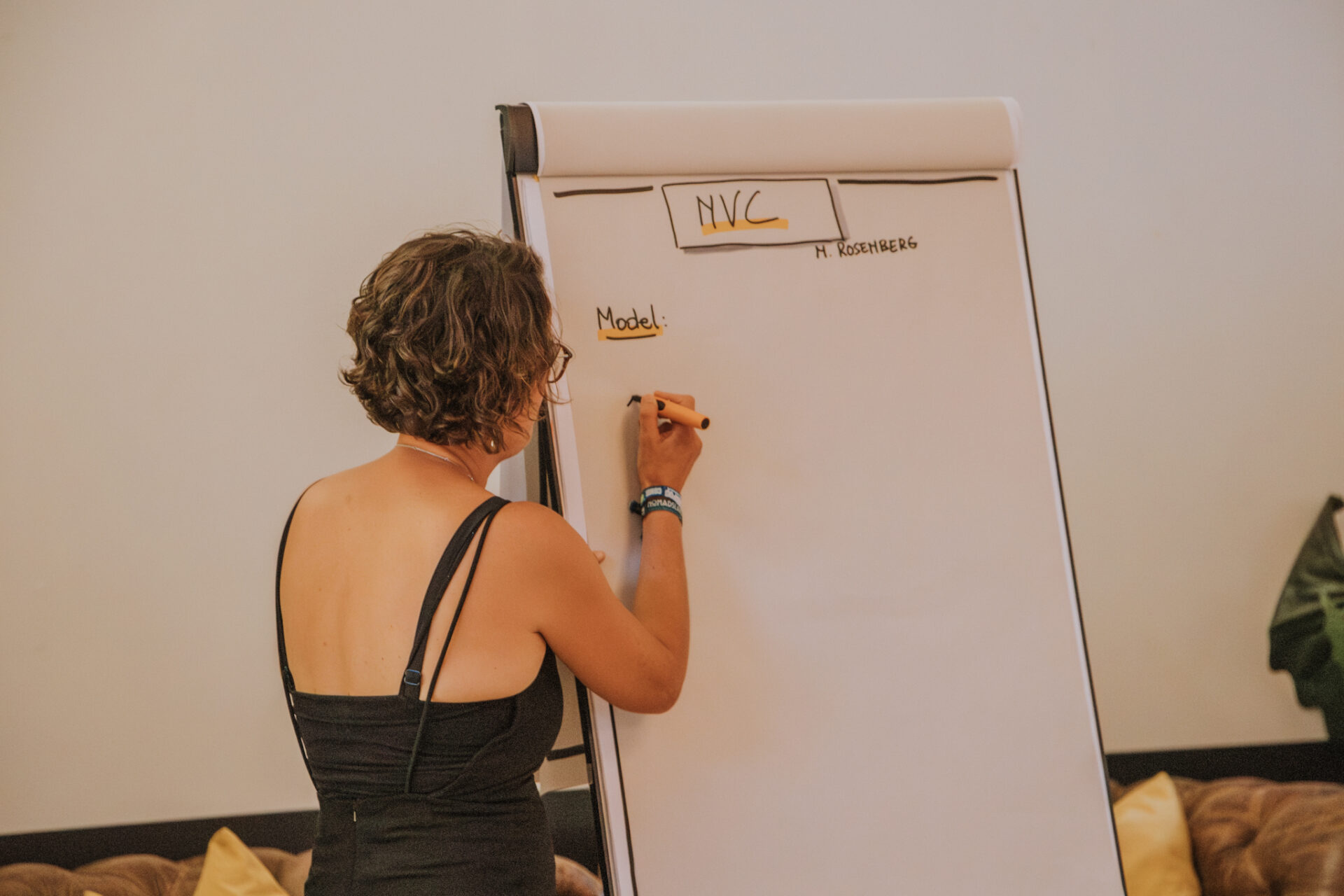
Philippe and Geneviève introduced several tools, including the Core Quadrant model and a hands-on version of Nonviolent Communication (NVC). The NVC framework (Observation, Feeling, Need, and Request) helped distinguish between assumptions and genuine insight. Through live practice and guided peer review, participants experienced the difference between feedback that lands and feedback that misses the mark.
Some key takeaways:
- Venting is not feedback, and feedback is not criticism.
- You should always ask for permission, don’t just jump in and give your unwanted feedback.
- Clear, observable behaviour is the best starting point.
By the end of the session, feedback no longer felt like a risk. It felt like a conversation that teams should have more often, and more intentionally.
Storytelling that sticks
With Jan Van der Burgt
The second group dove into the art of storytelling. And we have to say, it was a real show.
In true Jan style, the session opened with music, laughter, and just enough chaos to break the ice. Participants were invited to introduce themselves with a brief story, and from that point on, the focus shifted to turning communication into connection.
Using the TRIZ Liberating Structure, the group started with the worst-case scenario: “What makes a story terrible?” Drawing, singing, and a questionable Michael Jackson impersonation helped spark a list of what not to do, before flipping that perspective into more productive ground.
Then came CAST: a storytelling framework built around Content, Audience, Story, and Telling. Jan used examples from pop culture, personal anecdotes, and real-world communication challenges to illustrate each step:
- Content should always begin with “why”. The reason you’re telling the story in the first place.
- Audience matters. The best stories are built for a clear listener, not just broadcast to everyone.
- Story structure adds meaning: setup, disruption, resolution, and (sometimes) a glimpse into what’s next.
- Telling is where the magic happens. Routine, spontaneity, and presence make the difference between talking and truly connecting.

Participants got to test their skills with the Pixar Story Template: “Once upon a time… Every day… Until one day…”. It’s a deceptively simple structure that sharpens thinking and invites others in.
The final part of the session focused on delivery. What makes people want to listen? Jan offered practical tips on building tension, keeping things unpredictable, and staying authentic. Even a train whistle made an appearance as a timebox tool.
Some key takeaways:
- Every good story has a clear, central idea.
- The audience doesn’t need more information; they need relevance.
- Being personal builds trust. Being predictable does not.
- The best structure is invisible when done well.
It was a fast-paced, high-energy session that blended coaching, creativity, and laughter. Participants walked out with story drafts, frameworks to use, and a deeper understanding of why communication often falls short of its intended impact.
Conversations continued at the BBQ
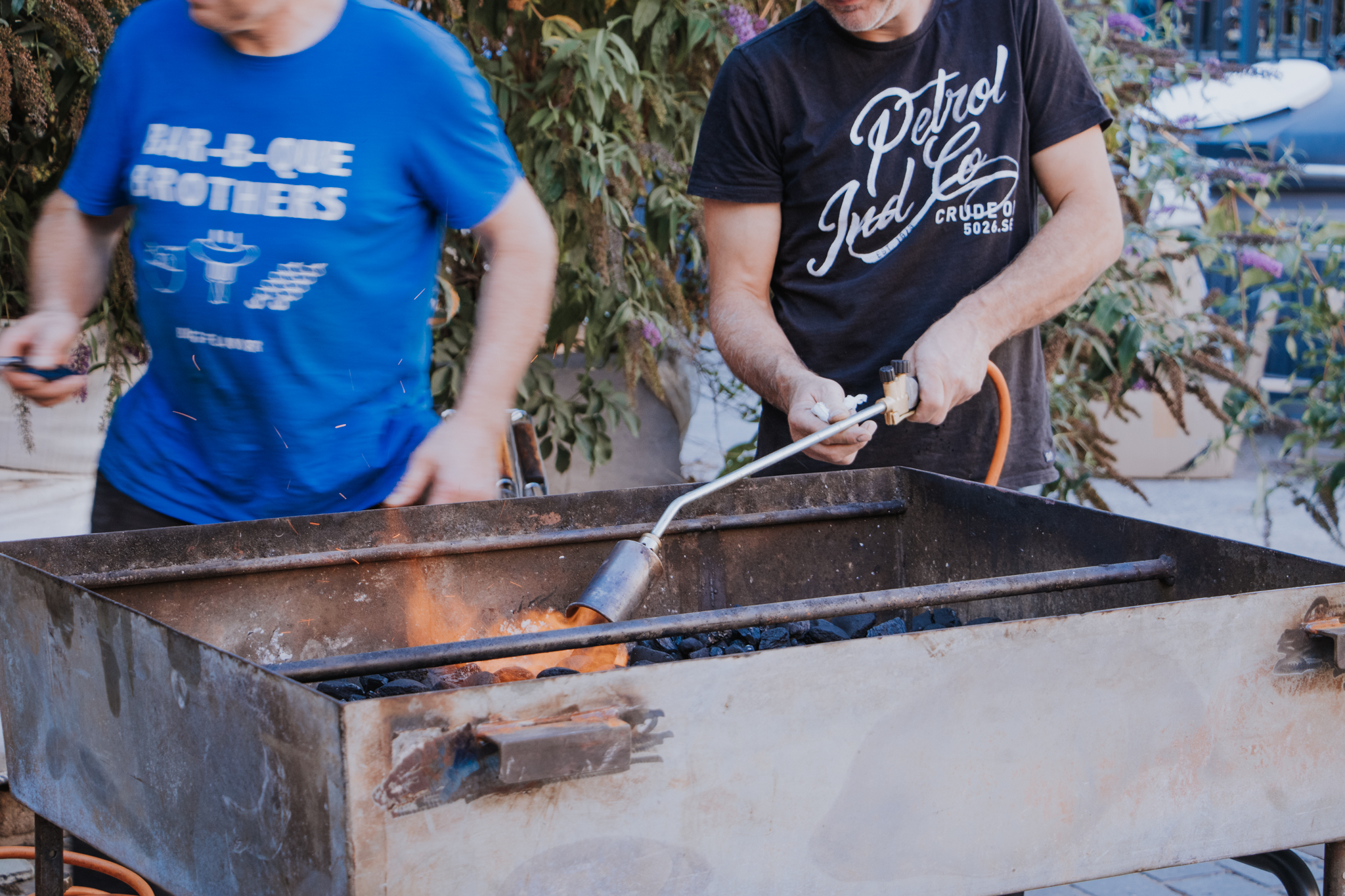
At 8:00 PM, the doors to the outside area opened, and the smell of grilled food filled the air. As plates filled up, so did conversations. Feedback continued informally over drinks, storytelling tips were swapped across tables, and new connections formed between Agile coaches, product people, team leads, and curious newcomers.
This blend of structured learning and relaxed connection is what makes Agile Kitchen special. It’s not just about what happens in the session. It’s about the conversations that happen because of it.

What people took away
- “Giving feedback isn’t about saying it right. It’s about making it safe.”
- “Structure brings clarity. And clarity builds trust.”
- “If your story has no tension, no one will care.”
- “Asking for feedback is a superpower. Start there.”
- “You don’t have to be a keynote speaker to tell stories that matter.”
Save the date: 19 November
The next Agile Kitchen session will take place on Wednesday, 19 November. Different topic, same open vibe. We’ll share more details soon.
Want to stay in the loop? Follow us on LinkedIn or subscribe to our newsletter.
And yes, we captured the vibe